


























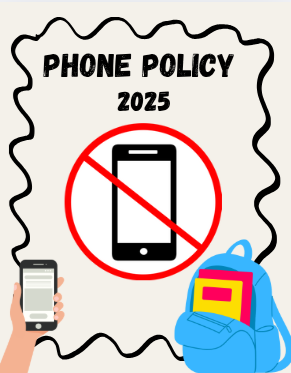
During the 2025 school year, students have noticed a new change in their everyday routines. A new law implemented in Kentucky went into effect July 1st, 2025, banning the use of cell phones during instructional time. At Great Crossing High School, students are required to dock their phones before the beginning of each class, and they can get them back after class ends, as well as have access to them at lunch. This law ensures that students remain focused and engaged, with no distractions in their learning environment.
Kentucky was not the first state to implement this law, as 34 other states have adopted similar policies in their schools. Research shows that the law has improved the focus and attention of students, and studies have shown that schools with the phone ban in place have higher test scores.
The new cell phone policy has also been shown to improve the mental health of students. The ban on cell phones has led to more student interaction and engagement inside the classroom.
Students and Staff Feel the Change Has Been Positive
Rachel Blevins has been a math teacher at Great Crossing for seven years. Blevins believes that the new phone policy is a positive addition to her everyday routine as a teacher. Blevins stated, “With the implementation of the new state law, I have seen classroom engagement increase across the board; I have seen my grades improve. In four of my six classes, I had every student pass the first nine weeks. That is an unprecedented number.”
GCHS English teacher Kristy Johnson has been teaching for over two decades. She said that the phone ban is beneficial, even if it doesn’t seem that way to students right now. Johnson said, ¨I feel like I have students back again. I see students talking to one another again.¨ She said that her student´s grades have improved compared to previous years as well. ¨My turn in rate is almost 100%, except for those students who are absent a lot,¨ she shared.
Blevins also said that her students have been following the new law very well. She said, ¨The students have been very compliant with the new law. Students are quick to put their phones up without prompting. They have done a great job with the new policy in my classroom.¨
Blevins said that the only thing she would change about the new policy is add a restriction on headphones and smartwatches, saying that it would help engagement much more. Ultimately, Blevins loves the new phone policy, and sees how it has been helping her students.
Johnson says she wouldn’t change anything in the policy if given the chance, and she wished it would have been implemented sooner since it has helped students become more focused in class and improve their grades.
Students also have had a favorable reaction to the change. Sophomore Olivia Conners finds the new law very beneficial. Conners stated, ¨I must admit that the law has helped improve my productivity in class. I get distracted much less than I used to, and I have even adopted a routine of locking my phone away at home while doing homework, as I find it significantly enhances my focus and productivity.¨
Consequences for Phone Violations Are Mixed
The policy at Great Crossing states that on the first offense for a phone violation, students will be assigned to in school suspension (ISS). If a student gets referred twice, or refuses to be searched during the first incident, it will lead to an out of school suspension.
Jenna Landacre, an assistant principal at GCHS, said that 38 people have been referred for violating the phone policy since it went into effect this school year, but referrals for phone issues have significantly decreased since the year began. She said students have started respecting the law more and more once they realized that it was beneficial for them.
Blevins and Johnson have similar views on the consequences of having your phone or being on your phone in class. Both agree that suspension is a good consequence of breaking the law. Johnson said, ¨I think suspension is hefty, but if we’re going to manage a rule, there have to be consequences that are real and actionable in the moment.¨
Blevins said, ¨I actually like that a cell phone infraction can lead to a suspension. We need students and parents to know that the policy means what it says. If we have a tough consequence, it shows that we mean business!¨
Conners, however, says the punishment is too harsh. She said, ¨I think the current punishment for breaking this rule is too harsh. I propose that the first offense should incur a lighter penalty, with the punishment becoming more severe for subsequent violations. I understand that the harsh penalties are meant to deter violations, but I believe they are excessively strict.¨


Ms. Maynard • Dec 1, 2025 at 10:23 am
This is really excellent. I love how you backed up the policy with evidence, using specific teacher quotes about improved grades and engagement, which gives the story real authority. I also like how you discuss the mixed feelings about phone consequences. This switch has been both challenging and beneficial, and I feel you captured that very well!
Kristy Johnson • Nov 25, 2025 at 1:41 pm
I like how you got multiple views on this topic. This is put together very well.
Lynn Fiechter • Nov 25, 2025 at 1:39 pm
Great work, Sophia! You created a comprehensive piece that looks at the student, teacher, and admin response to the new phone ban. I also loved hearing your writing voice come through in an entirely different piece than AP Lang. Nice job 🙂
Annette Manlief • Nov 25, 2025 at 1:35 pm
The new phone policy really is such a plus! Nicely done!